
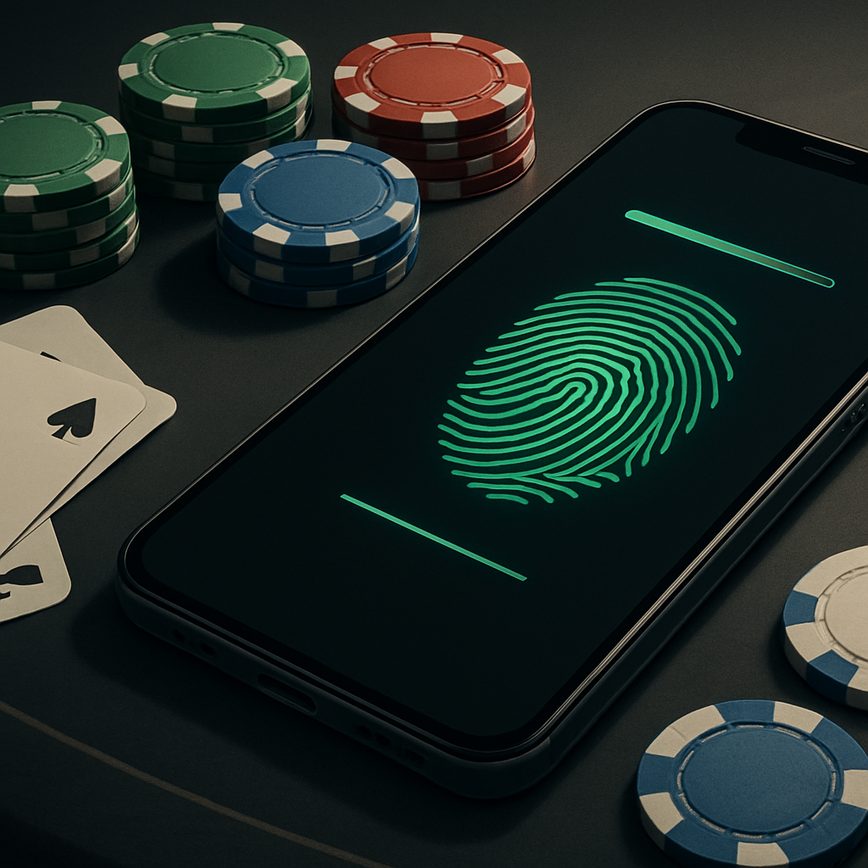
Overview of Biometric Security in Mobile Casino Apps
Biometric security has rapidly become a cornerstone in the evolution of mobile casino apps, serving as a sophisticated authentication method that enhances user protection. Unlike traditional password-based systems, biometric security leverages unique physiological traits such as fingerprints, facial recognition, or voice patterns to authenticate users. This cutting-edge technology not only simplifies the login process but also significantly reduces the risk of unauthorized access to sensitive personal and financial information within mobile casino platforms.
Mobile casino apps operate in a landscape where user trust and data integrity are paramount. Implementing biometric security addresses these concerns directly by providing a robust layer of defense against fraud and identity theft. Since biometric traits are inherently unique to each individual, the likelihood of fraudulent attempts succeeding is drastically minimized. This makes biometric authentication an ideal solution for mobile casino apps, where secure transactions and regulatory compliance are crucial.
Moreover, biometric security improves the overall user experience by enabling seamless and quick access to mobile casino apps. Players no longer need to remember complex passwords or worry about password resets; their biological identifiers serve as a key to their accounts. This convenience, combined with heightened security, fosters user confidence and encourages the adoption of mobile casino platforms.
In addition to convenience and security, biometric authentication methods bring scalability and versatility to mobile casino apps. Developers can integrate multiple biometric options, allowing users to select the method that best suits their preferences and device capabilities. This adaptability not only enhances user protection but also aligns with the growing demand for personalized and secure mobile gaming experiences.
In summary, biometric security in mobile casino apps represents a vital advancement in authentication methods. It provides enhanced user protection by safeguarding personal information and ensuring only authorized access, while also elevating the user experience through ease of use and reliability. As mobile casino apps continue to grow in popularity, biometric security will remain a key factor in maintaining trust and safeguarding players on these platforms.
Types of Biometric Authentication Used
Mobile casino apps commonly implement several biometric authentication methods to ensure secure access for users. Fingerprint recognition is one of the most popular techniques, allowing players to log in quickly and securely by scanning their unique fingerprint patterns. This method not only enhances user convenience but also reduces the risk of unauthorized access compared to traditional password-based systems.
Facial recognition is another widely used biometric technology in mobile casino apps. By analyzing distinctive facial features, this method offers a seamless and contactless way to verify a user’s identity. It is especially favored for its speed and high accuracy, providing an effective layer of security while maintaining ease of use.
Iris scanning, although less common due to the need for specialized hardware, is highly secure. This method involves scanning the unique patterns in the colored ring around the pupil of the eye, which are difficult to replicate. Iris scanning is often used in high-security applications and mobile casino apps aiming to provide maximum protection of user accounts.
Voice authentication is an emerging biometric method used in some mobile casino apps. It verifies users by analyzing vocal characteristics such as tone, pitch, and speech patterns. This adds a layer of security while allowing hands-free access, which can be particularly useful in scenarios where other biometric modalities are less convenient.
Together, these biometric authentication methods—fingerprint recognition, facial recognition, iris scanning, and voice authentication—significantly enhance secure access in mobile casino apps, helping to safeguard user data and prevent fraudulent activities.
Advantages of Implementing Biometric Security
Biometric security offers significant security benefits to both mobile casino users and operators by providing a robust layer of protection that is difficult to replicate or bypass. Unlike traditional passwords or PINs, biometric data such as fingerprints or facial recognition allow for reliable identification, thus vastly improving fraud prevention. This ensures that only authorized users gain access to accounts, greatly reducing the risks of unauthorized transactions and identity theft.
Another key advantage is user convenience. Biometric authentication streamlines the login process, eliminating the need for remembering complex passwords. Mobile casino players can quickly and securely access their accounts with a simple touch or glance, enhancing the overall user experience without compromising on safety. This ease of use encourages more players to engage confidently with mobile gaming platforms.
Moreover, biometric systems contribute greatly to data protection. Sensitive player information, including financial details and gameplay history, are safeguarded through advanced encryption tied to unique biometric identifiers. This strengthens compliance with data privacy regulations and builds trust between operators and their users, creating a more secure and reliable mobile casino environment.
Challenges and Limitations of Biometric Security
Biometric security in mobile casino apps offers significant advantages, but it is not without its challenges and limitations. One of the primary concerns relates to privacy issues. Since biometric data, such as fingerprints or facial recognition, are unique personal identifiers, users may worry about how this information is stored, used, and protected. If biometric data is compromised or misused, it can lead to severe privacy violations since, unlike passwords, biometric traits cannot be changed.
Another key challenge lies in the system limitations of biometric technology. While biometric scanners have improved in accuracy, they can sometimes produce false positives or false negatives. False acceptance rates (FAR) refer to instances where unauthorized users are wrongly identified as legitimate, presenting a security risk in mobile casino apps. Conversely, false rejections can frustrate genuine users who may be denied access, potentially harming the user experience.
Additional challenges include variability in biometric data caused by environmental factors or changes in physical appearance. For example, dirty or wet fingers can disrupt fingerprint scans, while facial recognition may struggle in poor lighting or if a user alters their facial features. Such limitations can reduce the reliability of biometric security systems in mobile casino apps.
Moreover, implementing biometric security requires robust backend infrastructure and strong encryption techniques to safeguard sensitive data. Mobile casino operators must invest in secure systems to prevent hacking attempts and data breaches, which remain potential vulnerabilities despite biometric safeguards.
In summary, while biometric security enhances convenience and security in mobile casino apps, challenges like privacy concerns, system limitations, and false acceptance rates highlight the need for continued improvement. A balanced approach involving user education, secure data handling, and supplemental security measures is crucial to maximizing the benefits of biometric technology while minimizing its drawbacks.
Privacy and Data Protection Issues
Privacy risks are a major concern for users when it comes to the collection of biometric data in mobile casino apps. Biometric security features, while enhancing convenience and security, require the handling of highly sensitive personal information. This raises questions about how user data is stored, processed, and protected against unauthorized access.
Data breaches pose a significant threat in the realm of biometric security. If a casino’s database is compromised, biometric identifiers such as fingerprints or facial recognition data could be exposed, and unlike passwords, biometric traits cannot be changed. Therefore, mobile casinos must implement robust secure storage solutions to safeguard this information, often involving encryption and strict access controls.
User consent is another critical factor in maintaining trust. Mobile casinos need to be transparent about what biometric data they collect, how it will be used, and must obtain explicit permission from users before activation. Clear privacy policies and easily navigable consent mechanisms help users feel confident in sharing their biometric data.
To comply with data protection laws like GDPR and CCPA, casinos must adhere to stringent regulations regarding data handling and retention. This includes limiting data collection to what is necessary, ensuring data accuracy, and allowing users to request deletion or access to their biometric data. Overall, prioritizing privacy and data protection is essential for the successful integration of biometric security in mobile casino apps.
Technical and Operational Limitations
Biometric security in mobile casino apps, while advanced, faces several technical hurdles that can affect its overall effectiveness. One significant issue is system errors during the recognition process, which can lead to false positives or failed authentications. These errors often occur due to variations in user biometric data capture, environmental factors, or software glitches, potentially allowing unauthorized access or denying legitimate users.
Device compatibility is another critical limitation; not all mobile devices support the full range of biometric technologies, such as fingerprint scanners or facial recognition sensors. This restriction can limit the adoption of biometric security and force reliance on less secure methods. Additionally, even when hardware is present, differences in operating systems and software versions may cause inconsistent performance or failures.
Operational issues, including technical failures and maintenance delays, also impact biometric systems’ reliability. Any network downtime, server errors, or software updates can disrupt biometric authentication, reducing user trust and app usability. Continuous monitoring and prompt troubleshooting are essential to minimize these interruptions and maintain secure access.
Overall, while biometric security adds a valuable layer of protection for mobile casino apps, system errors, device restrictions, false positives, and technical failures must be addressed carefully. Developers need to implement robust fallback mechanisms and ensure compatibility across devices to optimize security without sacrificing user experience.
Future Trends in Biometric Security for Mobile Casinos
The future of biometric security in mobile casino apps is poised to be revolutionized by cutting-edge technology and innovative security frameworks. One of the most exciting advancements on the horizon is the integration of AI biometrics. Artificial intelligence will enhance the accuracy and efficiency of biometric recognition systems, enabling mobile casino platforms to authenticate users with unprecedented precision while detecting fraudulent behavior and spoofing attempts in real time.
Future technology in biometrics will move beyond the traditional fingerprints and facial recognition to include more sophisticated modalities such as voice recognition, behavioral biometrics, and even vein pattern authentication. These emerging techniques will provide a multi-layered security shield, making it increasingly difficult for unauthorized users to gain access. Mobile casinos adopting these innovations will benefit from a secure environment that ensures player data and financial transactions remain protected.
Multi-factor authentication (MFA) is set to evolve significantly, combining biometrics with other authentication factors like device recognition and geolocation services. This evolution will not only improve security but will also offer seamless user experiences by reducing friction during login and transaction processes. For mobile casino apps, this means maintaining robust security measures without compromising player convenience.
Security innovation in the biometric field is also expected to include decentralized identity verification systems powered by blockchain technology. This approach will give players more control over their personal data and enhance trust in mobile casinos by ensuring transparency and immutability of authentication records. Additionally, ongoing improvements in encryption and data protection will complement these biometric security measures.
As mobile casinos continue to compete in a crowded marketplace, those that leverage future technology advancements in biometric security will differentiate themselves by offering safer and more reliable gaming experiences. The integration of AI biometrics, advanced multi-factor authentication methods, and innovative security protocols will define the next generation of mobile casino apps, setting new standards for security and player trust.
Integration of AI and Machine Learning
Artificial intelligence (AI biometrics) and machine learning have revolutionized biometric security in mobile casino apps by significantly enhancing authentication accuracy and the overall user experience. These advanced technologies analyze vast amounts of data collected from users’ biometric inputs, such as fingerprints, facial recognition, and voice patterns, to create highly individualized profiles that are difficult to replicate or forge.
Machine learning algorithms continuously improve by learning from each interaction, adapting to subtle changes in users’ biometric traits over time. This dynamic adaptability reduces false positives and false negatives, making biometric authentication more reliable and secure. For instance, behavioral biometrics—such as the way a user interacts with their device, their typing rhythm, or touch pressure—are analyzed in real-time to detect anomalies that might indicate fraudulent access attempts.
By integrating AI biometrics and machine learning, mobile casino apps provide a seamless and frictionless authentication process, minimizing the need for repetitive manual verification while maintaining high security levels. This not only enhances user convenience but also builds trust in the platform by ensuring that only authorized users gain access.
Ultimately, the synergy between AI and machine learning delivers improved accuracy in biometric authentication, fostering safer and more enjoyable gaming environments within mobile casino apps.
Enhanced Multi-Factor Authentication Methods
In the realm of mobile casino apps, ensuring robust user verification is paramount. Multi-factor authentication (MFA) plays a crucial role by combining biometric security with additional authentication factors to build stronger, layered security defenses. Biometric fusion—the integration of multiple biometric modalities such as fingerprint, facial recognition, and voice recognition—enhances security by making unauthorized access exceedingly difficult. This advanced approach ensures that even if one biometric factor is compromised, others provide backup verification, reducing the risk of fraud or breaches.
Beyond pure biometrics, MFA incorporates other layers such as temporary one-time passwords (OTPs), device-based authentication, and traditional passwords or PINs. These security layers work in conjunction to verify the user’s identity through independent and complementary methods, making it nearly impossible for malicious actors to gain access using stolen credentials alone. In mobile casino apps where financial transactions occur, this multi-factor approach protects users from identity theft and unauthorized wagers.
Moreover, layered security improves user trust and confidence in using the app, knowing their personal and financial information is safeguarded at multiple checkpoints. The synergy between biometric fusion and other MFA techniques ensures a seamless yet secure experience, balancing convenience with stringent security protocols for the ultimate protection of mobile casino users worldwide.

I have spent the last decade exploring the nuances of online gaming, from slot volatility to table game strategy, to understand what truly makes a casino platform stand out. My weekends are dedicated to testing different sites and bonus offers to provide clear, honest insights for fellow players. I focus on the practical aspects of gameplay and user experience to help others find the best entertainment value.